

Most people start asking about battery storage after the same moment – they look at their electricity bill, look at the weather outside, and wonder why so much of their daytime solar power is being sent back to the grid while they are out at work. That is where the pros and cons of solar battery storage become worth looking at properly. For some properties, a battery makes a solar system far more useful. For others, it adds cost without enough return.
The key is not whether battery storage is good or bad in general. It is whether it makes sense for the way your home or business actually uses electricity.
What solar battery storage does
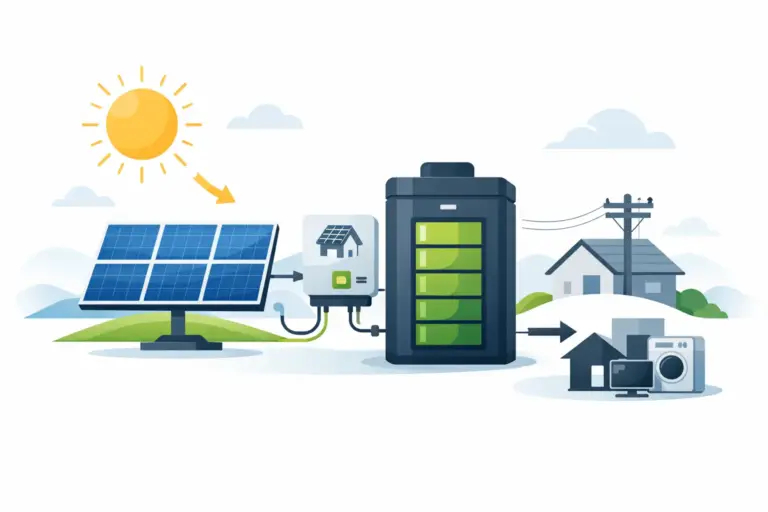
A solar battery stores excess electricity generated by your solar panels so you can use it later, usually in the evening or early morning when your panels are producing less or nothing at all. Without a battery, surplus solar generation is normally exported to the grid.
That sounds simple enough, but the value of a battery depends on your setup. If you are home during the day and already use most of your solar generation as it is produced, the benefit may be smaller. If your property is empty through most daylight hours and energy use ramps up after 5pm, battery storage can be much more attractive.
The main pros of solar battery storage
The biggest advantage is using more of the electricity you generate yourself. Solar panels on their own can still cut bills, but a lot of homes export a fair share of that power in the middle of the day. A battery lets you keep more of it on site and use it when grid electricity is typically needed most.
That can lead to better savings over time, especially where electricity prices are high. If you are buying fewer units from your supplier in the evening, the economics often improve compared with solar alone. It does not mean your bills disappear, but it can reduce your dependence on imported electricity.
Another strong point is greater control. A battery gives you more flexibility over when you use energy. Some systems can also charge from the grid during cheaper off-peak periods and discharge later when tariffs are higher. If you are on a time-of-use tariff, that can add another layer of value, although it needs to be set up correctly to avoid paying for technology you never fully use.
There is also the issue of backup. Some battery systems can provide power during a mains outage, either to selected circuits or, in some cases, more of the property. This appeals to homeowners who want more resilience and to businesses where a short power cut can cause disruption. That said, not every battery system includes backup capability as standard, so it should never be assumed.
For customers focused on sustainability, battery storage can also help reduce wasted solar generation. Instead of exporting more power than you need during the day and importing again later, you are making better use of what your system already produces. It is a practical way to improve self-consumption rather than just increase generation.
The main cons of solar battery storage
The clearest downside is upfront cost. Batteries are not cheap, and adding one to a solar installation can raise the total project cost significantly. Even when the long-term logic is sound, the payback period can be longer than some people expect.
That is where a lot of disappointment starts – not with the battery itself, but with unrealistic expectations. A battery can improve savings, but it is not a magic fix for every high bill. If your usage pattern is not suited to it, or if your property has relatively low evening demand, the financial return may be modest.
Battery capacity is another point people often misunderstand. A larger battery can store more energy, but that does not automatically mean it is better value. If your solar system rarely fills it, or your overnight demand is low, part of that capacity may sit unused. Oversizing is easy to do when the focus is on headline figures rather than real usage.
Lifespan matters too. Batteries degrade over time, and their storage capacity gradually reduces with age and use. Good systems are designed for long service life, but they do not last forever. That needs factoring into any cost calculation, especially if you are comparing battery storage against spending the same budget elsewhere on your property.
There is also some complexity involved. Battery systems need to be properly designed, correctly installed, and configured to suit the property. That includes the inverter arrangement, charging strategy, backup requirements if wanted, and compatibility with existing solar if it is a retrofit. A poor design can leave you with an expensive system that never performs as it should.
Pros and cons of solar battery storage for different properties
For a typical family home, the answer often depends on daily routine. If the house is empty for much of the working day and most electricity is used in the evening, battery storage usually makes more sense. If someone is home all day running appliances while the panels are generating, the battery may be less essential because more solar is already being used directly.
For landlords, the picture is different. Battery storage can add appeal to a property, but the investment only works if it matches the rental strategy and the likely benefit to tenants. In some cases, basic safety upgrades or efficiency improvements may deliver better value first.
For small businesses, battery storage can be useful where there is daytime generation but later trading hours, or where resilience is important. A business that closes by mid-afternoon may see less benefit than one with refrigeration, lighting, or equipment running into the evening.
Properties with electric heating, EV charging, or higher overnight demand can also be better candidates. The more usable stored electricity you can shift into expensive periods, the more compelling the battery becomes.
What affects whether a battery is worth it
There is no one-size-fits-all answer, but a few things matter more than anything else.
Your electricity usage pattern is usually the biggest factor. A battery works best when there is regular excess solar to store and a clear need for that power later. If either side of that equation is weak, the return drops.
System size matters as well. A modest solar array may not produce enough surplus to justify a large battery. On the other hand, a strong solar system with no way of using daytime generation can leave savings on the table without one.
Tariffs also play a part. Export payments, off-peak import rates, and how your supplier charges for electricity can all affect the numbers. What looked average under one tariff can look far better under another.
Then there is the quality of the installation. This is not a product you want fitted on guesswork. Proper design, safe installation, and honest advice make a real difference to performance and long-term value.
Common misconceptions
One common misunderstanding is that battery storage means going off-grid. In most cases, it does not. The vast majority of installations still rely on the grid at times, particularly in winter when solar generation is lower.
Another is that a battery will power the whole property in a blackout. Some systems can support backup, but many do not unless that feature is specifically included. Even where backup is available, it may only cover selected essentials rather than every circuit.
There is also a tendency to think bigger is always better. In reality, the right battery size is the one that matches your usage, your solar generation, and your budget.
When battery storage tends to make sense
Battery storage is often a good fit when you already have solar or are installing it, you use a lot of electricity outside daylight hours, and you want to cut reliance on imported power. It can also be a sensible option if you value backup capability, have an EV to charge, or are on a tariff that rewards smarter energy use.
It tends to be less attractive when daytime consumption is already high, the property has limited excess solar, or the budget is tight and better returns could come from other electrical upgrades first.
At Steel Electrical Services Ltd, this is why battery storage should be quoted around real usage rather than sales claims. The right answer for one property in Hull, East Yorkshire, or Lincolnshire may be the wrong answer for the next one a few streets away.
The best starting point is not the battery itself. It is understanding how your property uses power, when it uses it, and whether storing solar will genuinely make that system work harder for you. If the numbers stack up and the design is right, battery storage can be a very solid upgrade. If not, honest advice now is better than regret later.