

If your solar panels are making plenty of electricity at midday but your house uses most of its power in the evening, the obvious question is: how does solar battery storage work? The short answer is that it saves surplus electricity for later instead of sending all of it back to the grid. The more useful answer is in the detail, because battery performance, savings and suitability all depend on how your home or premises actually use energy.
How does solar battery storage work in practice?
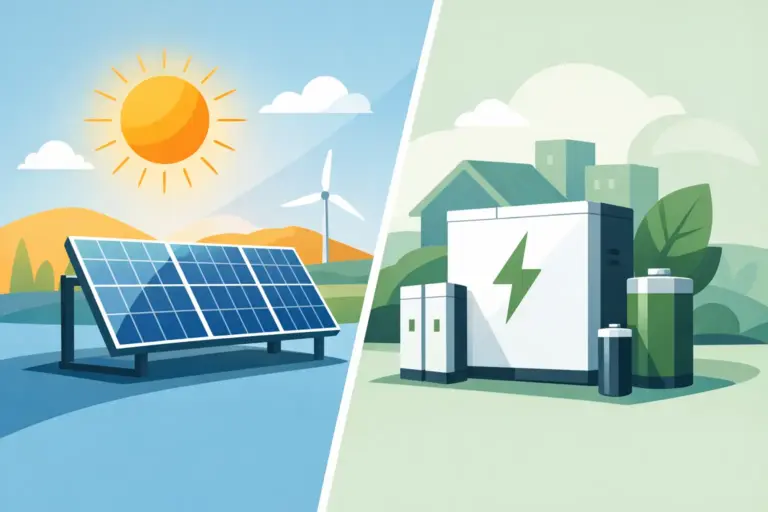
A solar battery stores the electricity your solar PV system generates but you do not use straight away. During daylight hours, your panels produce direct current electricity. That power is converted so your property can use it, and any excess can either charge a battery or be exported to the grid.
When the panels are no longer generating enough power, usually later in the day, the battery can discharge and supply stored electricity back into the property. In simple terms, it shifts energy from when it is produced to when you need it most.
That matters because many households are out during the day. Solar generation is often strongest when demand in the home is fairly low. Then, once everyone gets back, lights go on, cooking starts, televisions are on, and electricity use rises just as panel output drops. Battery storage helps bridge that gap.
The main parts of a battery storage system
Most systems rely on a few key components working together. The solar panels generate electricity, the inverter manages conversion between direct current and usable alternating current, and the battery stores energy for later use. There is also a control system that decides where power should go at any moment.
That control system is what makes the setup feel automatic. It can prioritise your live household demand first, then send any spare generation into the battery. If the battery is full, any further surplus is usually exported. Later, when generation falls, the system draws from the battery before importing from the grid, depending on how it has been configured.
Some batteries are AC-coupled and some are DC-coupled. For most property owners, the important point is not memorising the terminology but understanding that the right setup depends on whether you are adding a battery to an existing solar system or installing everything together from scratch.
What happens during the day and at night?
Think of the battery as a buffer rather than a generator. It does not create electricity by itself. It simply stores what has already been generated or, in some systems, what has been imported from the grid at cheaper times.
On a bright day, solar production rises in the morning, peaks around midday and drops later in the afternoon. If your property only needs part of that electricity at the time, the spare energy charges the battery. Once the battery reaches its usable capacity, further surplus is exported.
In the evening, the process reverses. Instead of buying all your electricity from the grid, your property can use the stored power first. If the battery runs low or demand spikes beyond what it can supply, the grid makes up the difference.
Overnight, if there is no solar generation, the battery may remain partly charged for planned use, or some systems can recharge from an off-peak tariff if that makes financial sense. That feature can be especially useful for homes with higher evening demand or businesses looking to manage energy costs more carefully.
How does solar battery storage work with your electricity bill?
The value of battery storage comes from increasing self-consumption. Without a battery, a larger share of your solar generation may be exported because you are not using it at the time it is produced. With a battery, more of that electricity stays on site and offsets imported energy later.
Whether that translates into strong savings depends on a few practical factors. One is your daytime usage. Another is your export payment rate. A third is the size of your battery compared with your generation and evening demand.
For example, if your household uses a lot of electricity during the day already, a battery may add less value because your solar is already being used directly. On the other hand, if you are out most of the day and use more power after work, battery storage can make far better use of your solar output.
It is also worth being realistic. A battery will not always cover your entire property through the night, especially in winter. Shorter days and lower solar generation mean there is simply less surplus to store. That does not make battery storage a poor choice, but it does mean expected savings should be based on real usage patterns rather than best-case figures.
Battery capacity, power and usable energy
This is where many buyers get caught out. A battery is not just one number. Capacity tells you how much energy it can store, while power tells you how quickly it can deliver that energy.
A larger capacity means more electricity can be saved for later use. Higher power output means the battery can run more demanding loads at the same time. Both matter. A battery might have enough stored energy for the evening, but if its output is limited, it may not cover several heavy appliances running together.
There is also a difference between total capacity and usable capacity. Batteries usually keep a small reserve to protect long-term performance, so not every stored unit is available for normal use. This is completely normal and should be explained clearly at quotation stage.
Are all solar batteries the same?
No, and the differences go beyond brand names. Chemistry, warranty terms, cycle life, control features and compatibility all vary. Most modern domestic systems use lithium-ion technology because it offers good efficiency, compact size and reliable performance.
Even then, one battery may suit a property better than another. Some are designed to integrate neatly with existing solar inverters. Some are better for modular expansion if you want to add capacity later. Others include backup capability, which can keep selected circuits running during a power cut, but not every system does this as standard.
That is why good advice matters. The right recommendation should reflect your property, your budget and how you use electricity, not just what happens to be on offer.
What affects battery performance over time?
Like any electrical equipment, batteries age. Their ability to hold charge gradually reduces over years of use. That is normal. The key is choosing a quality system with realistic performance expectations and a proper installation.
Temperature, charging habits, depth of discharge and general system design can all affect long-term results. A well-installed system should be set up to protect the battery and operate efficiently, rather than chasing short-term performance at the expense of service life.
This is one reason it pays to use an accredited installer. Battery storage is not just about fitting a box on the wall. It involves system design, electrical safety, product compatibility and compliance with the relevant standards.
Is solar battery storage worth it?
It depends on your aims. If your priority is getting the quickest possible payback, the answer will depend on your energy use, tariff, export rate and installation cost. If your priority is making better use of your own solar generation and reducing reliance on imported electricity, battery storage often makes strong practical sense.
For some customers, there is also a convenience factor. Knowing that more of the energy generated on site is being used on site feels worthwhile in itself. For others, the appeal is future-proofing, especially if they are also considering an EV charger or expect electricity use to rise.
Commercial properties can benefit too, although the case should always be assessed properly. Daytime operating hours may mean direct solar self-use is already high, but batteries can still help with load shifting and better energy management in the right setup.
A sensible way to think about battery storage
The best way to view solar battery storage is as part of a wider system, not a magic fix. It works best when the panels, inverter, battery size and property demand all line up sensibly. Oversizing can leave you paying for capacity you rarely use. Undersizing can limit the benefit.
A proper assessment should look at your actual electricity habits, not broad assumptions. How much you use, when you use it, whether you are adding solar at the same time, and whether you want backup features all make a difference.
At Steel Electrical Services Ltd, that is exactly how we approach it – straightforward advice, safe installation and a system matched to the property rather than a one-size-fits-all sales pitch.
If you are considering battery storage, the useful question is not whether it sounds clever. It is whether it fits the way your home or business uses power, today and over the next few years.