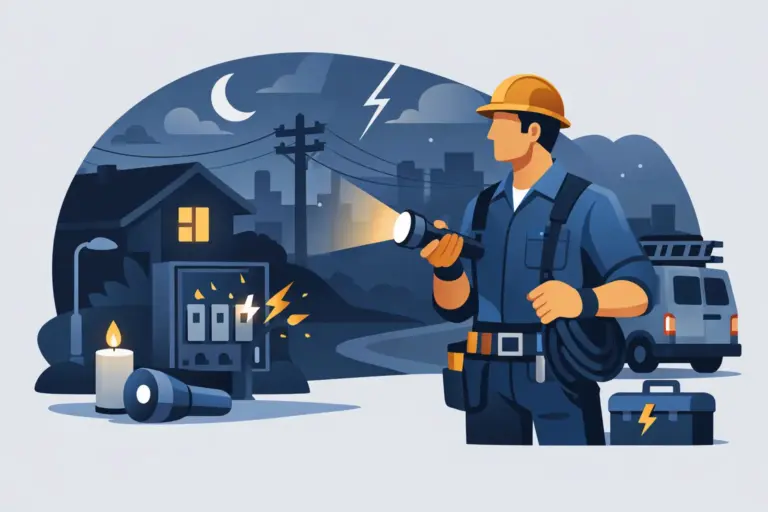


A tripping fuse board at 10pm, a socket that feels warm, or an old consumer unit with no RCD protection are not jobs to put off. Domestic electrician services cover far more than replacing a light fitting. They keep your home safe, help you meet legal responsibilities as a landlord, and make sure new technology such as EV chargers and solar battery systems is installed properly.
For homeowners across Hull, East Yorkshire and Lincolnshire, the right electrician should give clear advice, turn up when agreed, work cleanly and explain what needs doing without pressure or technical jargon. Some jobs are small and straightforward. Others reveal underlying issues that need careful fault finding and a properly planned solution.
What domestic electrician services should cover
A capable domestic electrician should be able to support your home from urgent repairs through to major improvements. That includes fault finding when circuits trip or sockets stop working, minor electrical work such as new lights or extractor fans, consumer unit upgrades, rewires, and electrical safety inspections.
The same applies when you are making changes to how your home uses energy. An EV charger needs the right circuit capacity, protective devices and cable route. Solar PV and battery storage need a design that suits your roof, usage patterns and existing electrical installation. These are not areas for guesswork or a quick fix.
At Steel Electrical Services Ltd, the focus is on identifying the issue properly, recommending only what is needed and completing work to the required standard. That matters whether the job is a single replacement socket or a full property rewire.
When to call a domestic electrician
Electrical faults are not always dramatic. Often, the early signs are easy to dismiss until they become disruptive or unsafe. If your consumer unit trips repeatedly, you should not simply keep resetting it. A circuit is tripping because the protective device has detected a fault, overload or leakage to earth. The cause needs investigating.
Other warning signs include flickering lights, burning smells, buzzing accessories, damaged cables, tingling from metal fittings, discoloured sockets and switches, or lights that dim when another appliance starts. Any of these can point to loose connections, overloaded circuits or ageing equipment.
Older properties deserve particular attention. Wiring may still function day to day while no longer meeting the standard expected for a modern household. More appliances, electric showers, induction hobs, home offices and vehicle charging all place greater demand on an installation than it was originally designed to handle.
If there is an immediate risk, such as smoke, sparks, an electric shock or exposed live parts, switch off the supply if it is safe to do so and arrange emergency electrical help. Do not remove covers or attempt repairs yourself.
Fault finding is about cause, not just symptoms
A light that will not work may be a failed lamp, but it could also be a loose terminal, faulty switch, damaged cable or issue at the consumer unit. Replacing parts until something works is rarely efficient and can leave the real fault in place.
Professional fault finding follows a logical process. The electrician will ask what happened, test the relevant circuit, inspect accessories and connections, and trace the issue before carrying out the repair. This approach can save money compared with repeated call-outs for the same problem.
There is sometimes a trade-off. A repair may be perfectly suitable where the circuit is otherwise sound. If testing shows widespread deterioration, repeated poor alterations or inadequate protection, a larger upgrade may be the safer and more cost-effective choice over time. Honest advice should make that distinction clear.
Consumer unit upgrades and rewires
The consumer unit, often called a fuse board, is central to your home’s electrical safety. Modern units use circuit breakers and RCD or RCBO protection to reduce the risk of electric shock and fire if a fault occurs. An old-style fuse board is not automatically dangerous, but it may lack the protection needed for current standards and modern household demands.
A consumer unit upgrade is often considered after an Electrical Installation Condition Report, before installing an EV charger, or when an existing board has become overcrowded or damaged. The work should include testing, certification and clear labelling, not simply fitting a new enclosure.
A full rewire is more involved. It may be needed in a property with old wiring, extensive deterioration, insufficient sockets, unsafe alterations or a major renovation planned. Rewiring can mean lifting floorboards, chasing walls and coordinating with decorators or builders, so it is worth planning carefully. In some homes, a partial rewire is enough. The answer depends on the test results, the age and condition of the circuits, and what you need the property to do in future.
Safety checks for homeowners, landlords and sellers
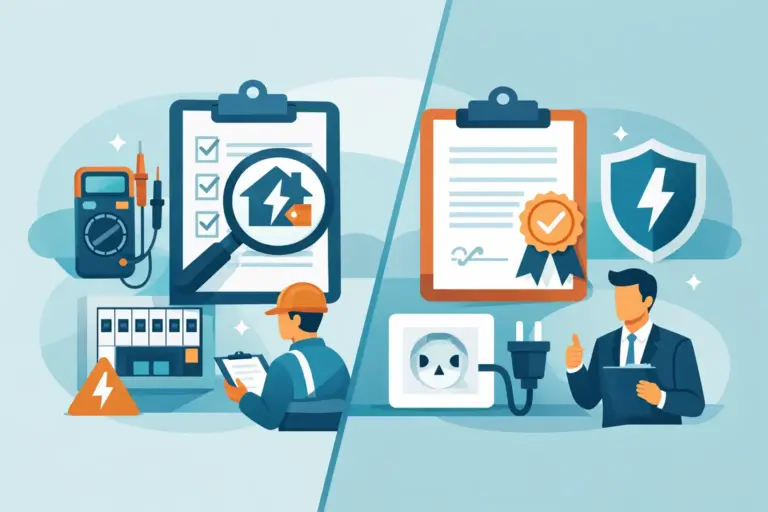
An Electrical Installation Condition Report, or EICR, provides a formal assessment of the fixed wiring in a property. It does not test every appliance you own. Instead, it assesses the installation itself, including the consumer unit, circuits, sockets, switches and protective arrangements.
For landlords, electrical safety responsibilities are clear. Rental properties in England need a satisfactory EICR at least every five years, or sooner if the report recommends it. Any observations that require remedial work must be dealt with promptly and the correct documentation retained.
Homeowners can also benefit from an EICR, particularly when buying an older house, planning alterations, noticing recurring faults or returning to a property after a long period empty. Sellers may choose to arrange an inspection to answer questions before they slow down a sale. A report gives you evidence to work from rather than relying on assumptions about the wiring.
Domestic electrical upgrades that make daily life easier
Not every electrical job starts with a fault. Many homeowners call an electrician because the property no longer suits how they live. Extra sockets can reduce reliance on extension leads. Better kitchen lighting can make worktops safer and more practical. Outdoor lighting, security lighting and power to garages or garden offices all need properly designed circuits and suitable equipment for the environment.
Extractor fans are another common improvement, especially in bathrooms and utility rooms where moisture can cause mould and damage finishes. The right fan must be correctly sized, installed in the appropriate zone and controlled in a way that provides effective ventilation.
For homes moving towards lower-carbon transport and energy, installation quality matters even more. EV charging should be assessed against your supply capacity and earthing arrangement. Solar PV and battery storage should be designed around realistic generation, usage and backup expectations. A bigger system is not always better if it does not match your household’s energy profile.
What good electrical work looks like
You should expect more than a working end result. Good domestic electrical work starts with a clear scope and quotation, especially for larger projects. Your electrician should explain any disruption, identify where cables or equipment will be located, and make you aware of decisions that affect cost or appearance before work begins.
For work that requires notification or certification, ask what paperwork you will receive when the job is complete. Keep certificates with your property documents. They can be useful for future inspections, insurance queries, renovations and a house sale.
Accreditation also matters. Using an appropriately qualified, insured electrician with recognised scheme approval gives you greater confidence that work is being carried out, tested and certified correctly. For solar and battery projects, relevant renewable-energy accreditation is especially important where warranties, export arrangements or finance are involved.
Choosing the right electrician for your home
Price is naturally part of the decision, but the cheapest quote can be misleading if the scope is vague or testing and certification are missing. Compare what is actually included: materials, labour, testing, making good, notification, certificates and any assumptions about access or existing faults.
It is also reasonable to ask how the electrician will deal with unexpected findings. In older homes, hidden cable damage or non-compliant previous work can be uncovered only once testing starts. A dependable contractor will show you the issue, explain the options and agree any additional work before proceeding where possible.
If you need domestic electrician services, act on early warning signs rather than waiting for a complete failure. A quick, properly assessed repair can protect your home, your family and your plans for the property – and it is usually far less disruptive than dealing with an avoidable emergency.