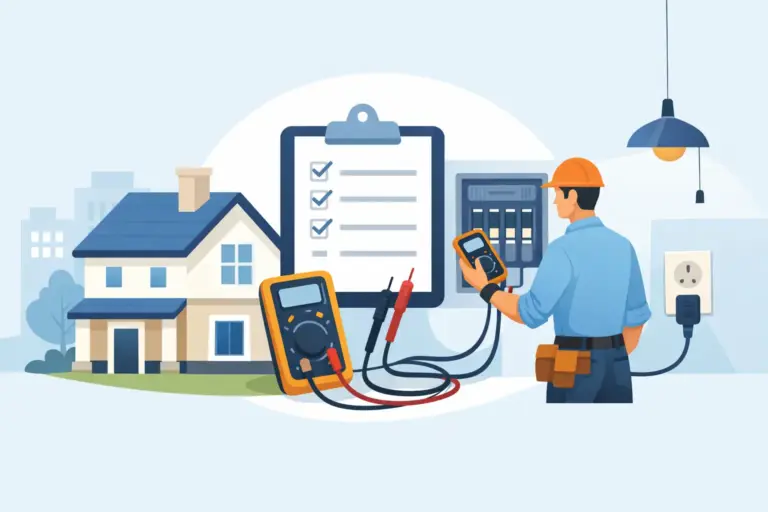


A property can look well maintained while the wiring behind its walls is past its useful life. Electrical rewiring services replace ageing or unsuitable circuits, cables, accessories and protective equipment so an installation can meet current safety expectations and support how the building is used now.
For a homeowner, that may mean resolving frequent tripping, adding enough sockets for modern living or preparing for an extension. For a landlord, it may be the practical response to an unsatisfactory Electrical Installation Condition Report (EICR). For a business, it may be needed when existing circuits cannot safely support new machinery, IT equipment, lighting, EV chargers or a change of use. The right answer is not always a full rewire, but it should always start with a proper assessment.
What electrical rewiring services involve
A rewire is more than changing a consumer unit or replacing visible sockets and switches. A full rewire usually involves removing or disconnecting redundant wiring where practical, installing new cables and circuits, upgrading accessories, improving earthing and bonding arrangements, fitting suitable protective devices, then inspecting and testing the completed installation.
The design should reflect the property and its intended use. A family home may need additional socket outlets, dedicated kitchen circuits, smoke and heat alarms, and provision for a future EV charger or solar battery system. A commercial unit may require separate circuits for emergency lighting, fire alarm equipment, data infrastructure, extraction, machinery or tenant areas.
Not every installation needs to be stripped back to bare walls. In some properties, a partial rewire or targeted circuit upgrade is safer, less disruptive and more proportionate. That decision depends on the age and condition of the wiring, inspection results, access, the extent of alterations and whether different areas of the installation can be safely retained.
Signs a rewire may be the right solution
Electrical faults should never be ignored, but a single issue does not automatically mean the whole property needs rewiring. A loose connection, damaged accessory or faulty appliance can often be repaired without major works. The concern rises when faults are repeated, widespread or linked to an ageing installation.
Common warning signs include circuits that trip regularly, flickering lights, warm sockets or switches, damaged cable insulation, burning smells, discoloured accessories and electric shocks or tingles from metal fittings. Older fuse boards with rewireable fuses, a lack of RCD protection, limited socket provision and visible old-style cabling may also indicate that an upgrade is overdue.
Property age is useful context, not a verdict. Wiring installed decades ago may still be serviceable if it has been competently maintained, tested and remains suitable for use. Equally, newer wiring can be unsuitable if it has been poorly altered, overloaded or damaged. An EICR gives a clearer picture than assumptions based on a building’s age alone.
When an EICR points towards rewiring
An EICR assesses the condition of an existing installation and identifies observations that need attention. A report may recommend remedial work, but this can range from replacing a damaged socket to upgrading an entire distribution arrangement. It is not a blanket instruction to rewire.
Where an inspection identifies old wiring in poor condition, inadequate earthing, multiple defects across circuits, insufficient protection or equipment that is no longer suitable for the premises, a rewire can be the most reliable long-term option. Repeated small repairs can become more expensive and disruptive than addressing the underlying condition properly.
Landlords should treat EICR findings promptly and keep clear records of completed remedial work. For commercial duty holders, inspection results should feed into planned maintenance and risk management rather than being filed away until the next test date.
Planning a rewire with minimal disruption
A well-planned rewire is disruptive by nature. Cables often need to be routed through walls, floors and ceilings, which can involve lifting floorboards, chasing walls and making good afterwards. Honest advice at the survey stage helps avoid surprises.
Before work begins, an electrician should discuss how the property is used, the required number and locations of outlets, high-load equipment, lighting controls, internet and data needs, security systems and any planned renovation work. This is also the best time to consider future requirements. Installing suitable containment, spare ways in the consumer unit or distribution board, and appropriately sized supplies can make later additions far easier.
For occupied homes, rewiring is often best coordinated with refurbishment, a kitchen replacement or an extension. Empty properties are generally quicker to complete and simpler to access. In commercial premises, works can sometimes be phased by floor, office, unit or out-of-hours period to reduce downtime. The practical approach depends on the building layout, operational requirements and whether areas can be safely isolated.
Temporary power may be possible in some situations, but it must be planned safely. Businesses should identify essential equipment before work starts, including servers, refrigeration, alarms, medical or welfare equipment, payment systems and emergency lighting. A clear programme and communication with staff, tenants or residents make a significant difference.
Compliance, testing and certification
Electrical work must be designed and installed in accordance with the relevant requirements, including BS 7671, commonly known as the IET Wiring Regulations. A rewire should also consider Building Regulations requirements where they apply, fire safety arrangements, cable routes, circuit labelling and accessibility of electrical equipment.
On completion, the installation needs thorough inspection and testing. This confirms that protective measures operate correctly, circuits are correctly identified and the work is safe to energise. The property owner or responsible person should receive an Electrical Installation Certificate, test results and clear information about the installation.
For landlords and commercial property managers, these documents are valuable compliance records. For homeowners, they provide evidence of professionally completed work and can be useful when selling, letting or insuring a property. Choosing a competent, appropriately accredited contractor matters because the quality of design, installation, testing and documentation all affect the safety of the finished job.
A consumer unit upgrade is not always a rewire
A modern consumer unit can improve protection by introducing RCDs, RCBOs and surge protection where appropriate. However, fitting a new board onto poor, damaged or unsuitable wiring does not solve the underlying problem. The existing circuits must be inspected and tested before a replacement board can be safely specified.
The reverse is also true. If the circuits are sound and suitable, a consumer unit upgrade may be a sensible alternative to a full rewire. This is why quotations should be based on survey findings and the property’s real needs, not a one-size-fits-all package.
Future-proofing the electrical installation
Electrical demand is changing quickly. Heat pumps, induction hobs, home offices, electric vehicles, solar PV, battery storage and commercial charging points can all alter a property’s load profile. Older installations were rarely designed with these technologies in mind.
A rewire creates an opportunity to plan capacity properly. That may include dedicated circuits for an EV charger, solar inverter or battery, improved distribution for a commercial workspace, energy-efficient lighting controls, and monitoring that helps a business understand consumption. It does not mean installing every technology immediately. It means avoiding decisions that make sensible future upgrades unnecessarily costly.
For properties across Hull, East Yorkshire and Lincolnshire, Steel Electrical Services Ltd can assess the condition of an installation, explain the available options without sales pressure and carry out rewiring work with safety, testing and certification built into the process.
If your wiring is showing warning signs, an EICR has raised concerns or your property is being altered for a new use, arrange an assessment before faults or capacity issues become more serious. A clear plan now can protect people, support compliance and give the property an electrical system that is ready for the years ahead.