

A new electric vehicle may come with a charging cable, but that does not mean any socket or tradesperson is suitable for the job. Who can install a car charger safely and legally? In most cases, it should be a suitably qualified, competent electrician with experience in EV charge point installations and the certification needed to confirm the work complies with current regulations.
A properly planned installation protects people, property and vehicles. It also gives you a charging point that works reliably, makes the best use of your electrical supply and is ready for the way you use the vehicle.
Who can install a car charger in the UK?
A car charger, more accurately called an EV charge point, should be installed by an electrician who is competent to design, install, test and certify the work to BS 7671, the UK Wiring Regulations. EV charging places a sustained, high electrical load on an installation, so this is not a suitable job for a general handyman or an unqualified installer.
In England, a typical new EV charge point installation at a dwelling requires a new dedicated circuit, which is notifiable electrical work under Part P of the Building Regulations. A registered electrician can normally self-certify the work through their competent person scheme and arrange for the relevant Building Regulations certificate to be issued. If the installer is not registered, Building Control must be notified before work begins, which can add cost and delay.
Choosing a NICEIC-approved contractor provides useful reassurance. It indicates that the contractor is assessed for the standard of their work and can certify applicable installations. Experience with EV systems matters too, because a charge point is not simply another outdoor socket.
For grants that may be available to landlords, flat owners or businesses, check the current eligibility rules before appointing an installer. Some schemes require the work to be completed by an installer authorised for that particular grant.
Why a standard socket is not the same as a charger
A domestic three-pin socket can sometimes be used for occasional, low-rate charging with the manufacturer-approved portable lead. It is rarely the best long-term answer. Charging can continue for many hours, and older sockets, loose connections or circuits not intended for continuous demand can overheat.
A dedicated EV charge point is designed for regular charging. It will usually provide faster charging, appropriate circuit protection and features such as load management, scheduling and smart tariff compatibility. The installation must take account of the manufacturer’s instructions, the type of earthing arrangement at the property and the characteristics of the existing electrical installation.
This is why a qualified electrician starts with a survey rather than offering a one-size-fits-all price. The visible charger is only part of the system behind it.
What a competent installer should check first
Before recommending a charger or confirming a fixed quotation, the installer should assess the supply and the practical route for cabling. At a home, this usually includes the consumer unit, meter position, parking location and any external building work required. At a business or multi-occupancy property, the assessment can be more involved.
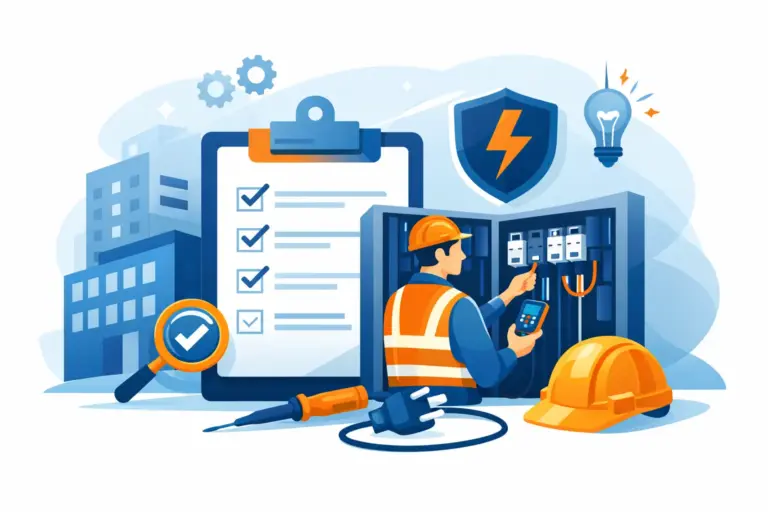
A thorough survey should consider:
- the available capacity of the electrical supply and whether other heavy loads are already present
- the condition, age and spare ways available in the consumer unit or distribution board
- the cable route, including walls, floors, garages, communal areas and underground sections
- earthing arrangements and the protective measures required for EV charging
- the location of the charge point, access for users and protection from accidental impact
- future demand, particularly where a household may add a second EV or a business expects more drivers to charge.
If the existing consumer unit is outdated, damaged or lacks suitable protection, an upgrade may be the sensible option before the charger is fitted. That is not an unnecessary extra. It is a safety decision based on the condition and capacity of the installation.
The rules are different for homes, rentals and workplaces
A homeowner generally has the simplest route, provided there is off-street parking and sufficient electrical capacity. The installer can often fit a dedicated charger close to the driveway or garage, with the circuit protected at the consumer unit.
Landlords need to think beyond the initial installation. In a single rental property, responsibilities include ensuring the electrical installation remains safe and maintaining the required electrical inspection and testing records. In blocks of flats, permission may be needed from the freeholder or managing agent, while cable routes and metering arrangements need careful planning.
For businesses, the key question is often not whether one charger can be installed, but how the site will cope when demand grows. A workplace with several staff EVs can quickly place significant demand on the supply. Load balancing allows charge points to share available power intelligently, reducing the risk of overloading and potentially avoiding an immediate supply upgrade.
Commercial sites should also consider driver access, billing arrangements, parking controls, bollards, signage and the ongoing maintenance of the equipment. A car park installation has to work in real operating conditions, not just pass its first test.
Can a car dealer, charger supplier or builder install it?
A car dealer may arrange an installation as part of a vehicle purchase, and a charger supplier may offer an approved installer network. This can be convenient, but the electrical work should still be completed and certified by a qualified electrician. Ask who will carry out the installation, whether they are registered to self-certify applicable work and what certificates you will receive.
A builder can prepare the site, install ducting or make good walls and surfaces, but should not connect the charge point unless they are suitably qualified and competent to carry out the electrical work. On new-build and refurbishment projects, involving the electrician early avoids poor cable routes, inadequate containment and expensive remedial work later.
The lowest installation price is not always the best value. It may exclude groundworks, upgrades, certification, cable length or work needed to make an older installation safe. Clear scope and honest advice at survey stage prevent surprises.
What paperwork should you receive?
Once installation and testing are complete, keep the documentation with your property records. For most installations, this should include an Electrical Installation Certificate, details of test results and the charge point’s instructions. Where the work is notifiable, you should also receive the relevant Building Regulations compliance certificate.
For commercial and managed properties, retain records of the equipment specification, circuit identification, maintenance requirements and any access or billing settings. This helps facilities managers and future electricians understand the installation quickly, particularly when expanding the charging network.
The electrician should also show you how the charger operates. That includes starting and stopping a session, using any app or smart schedule, responding to a fault indication and knowing when to call for support.
When may the electricity supply need upgrading?
Not every property can support a high-power charger immediately. A typical home charge point may be rated at 7 kW, while larger commercial installations can require far more capacity. If the property already has electric heating, a heat pump, induction cooking, solar battery storage or other substantial electrical loads, the available headroom must be assessed.
Load management may be enough. It monitors demand and temporarily reduces the charging rate when the property is using more electricity elsewhere. In other cases, the distribution board, incoming supply or site infrastructure needs upgrading. An experienced installer will explain the options rather than fitting equipment that risks nuisance tripping or restricted performance.
Solar PV can also work well alongside EV charging, particularly for daytime workplace charging or households where a vehicle is at home during the day. However, the charger, inverter and battery system need to be configured as one considered electrical system. Generating solar power does not remove the need for correct circuit design and protection.
Questions to ask before appointing an installer
Ask whether the electrician has specific EV charging experience, what survey they will carry out and whether the quoted work includes testing and certification. Confirm how cable routes, external weather protection, groundworks and consumer unit changes will be handled. For a workplace, ask how the design can be expanded without starting again when more chargers are required.
It is also sensible to ask what happens if the survey identifies a limitation. A professional contractor should set out the issue clearly, explain the safe options and provide a revised scope before work proceeds. Zero sales pressure is particularly valuable when electrical capacity or compliance work is involved.
Steel Electrical Services Ltd provides EV charging installations for homes, landlords and commercial properties across Hull, East Yorkshire and Lincolnshire, with the survey, certification and practical advice needed to get the job completed correctly.
An EV charge point is a long-term addition to your property, not just an accessory for the car you own this year. Appoint a qualified electrician who will assess the installation properly, leave clear certification and design for the next stage of your electrical needs.