

A tripping circuit before opening time, an emergency light that fails during a test, or an overloaded extension lead behind a counter can quickly become more than an inconvenience. A commercial electrical compliance checklist gives business owners, facilities managers and landlords a practical way to control those risks, protect people and demonstrate that electrical systems are being properly managed.
Electrical compliance is not achieved by obtaining one certificate and filing it away. It relies on suitable installation design, regular inspection, day-to-day checks, prompt repairs and clear records. The exact requirements vary by premises and use, but the following checklist provides a sound framework for offices, shops, warehouses, hospitality venues and managed commercial properties.
Who is responsible for commercial electrical safety?
Under the Electricity at Work Regulations 1989, employers, self-employed people and those in control of electrical systems have duties to ensure electrical equipment is maintained so far as reasonably practicable to prevent danger. In a leased unit, responsibilities can be shared. A landlord may retain responsibility for the main intake, communal areas or fixed wiring, while the tenant is responsible for equipment brought into the premises.
This is why lease terms, maintenance agreements and communication between landlords and occupiers matter. If responsibility is unclear, an issue can remain unresolved because each party assumes the other is dealing with it.
The regulations do not set a single inspection interval for every business. A small low-risk office and a busy commercial kitchen do not place the same demands on their electrical installation. Your inspection and maintenance plan should reflect the environment, the age and condition of the installation, how it is used and any previous defects.
Commercial electrical compliance checklist: fixed wiring
Fixed wiring includes the consumer unit or distribution boards, circuits, sockets, switches, lighting, isolators and hard-wired equipment. These are the parts of the system most people do not see, but their condition has a direct effect on safety and business continuity.
A competent electrical contractor should inspect and test the installation periodically and issue an Electrical Installation Condition Report, commonly known as an EICR. The report records observations using classification codes and confirms whether the installation is satisfactory or unsatisfactory at the time of inspection.
Your fixed-wiring checklist should cover:
- A current EICR for each relevant part of the premises, with the next inspection date recorded.
- Evidence that any C1, C2 or FI observations have been investigated and remedial work completed without delay.
- Distribution boards that are accessible, correctly labelled, protected against damage and free from unsafe modifications.
- Appropriate circuit protection, earthing and bonding, including testing of RCD protection where fitted.
- Safe condition and operation of sockets, switches, lighting points, isolators and fixed equipment.
- Confirmation that additions and alterations have been designed, installed and certified to the current requirements of BS 7671.
BS 7671 is not itself legislation, but it is the recognised standard for electrical installations in the UK and is widely used to demonstrate good practice. An EICR is a condition report, not a guarantee that no future fault will occur. It should be supported by planned maintenance and regular visual checks.
Do not ignore changes to the premises
A change in how a space is used can create new electrical risks. Converting storage space into offices, fitting out a retail unit, installing new machinery, adding a commercial kitchen or creating EV charging bays all affect demand and circuit design.
Avoid treating the existing installation as an unlimited supply. Before major equipment is connected, an electrician should assess available capacity, protective devices, cable routes and the effect on the wider installation. This reduces the risk of overloaded circuits, nuisance tripping and overheating.
Portable equipment, leads and everyday checks
Portable appliance testing is often referred to as PAT testing, but there is no legal rule that every item needs a sticker or that all equipment must be tested annually. The legal duty is to maintain equipment so it does not create danger. The right approach depends on the equipment and environment.
For example, a double-insulated computer in a clean office normally presents less risk than a power tool used daily on a construction site or a kettle in a busy staff kitchen. A risk-based programme may combine user checks, formal visual inspections and electrical tests at suitable intervals.
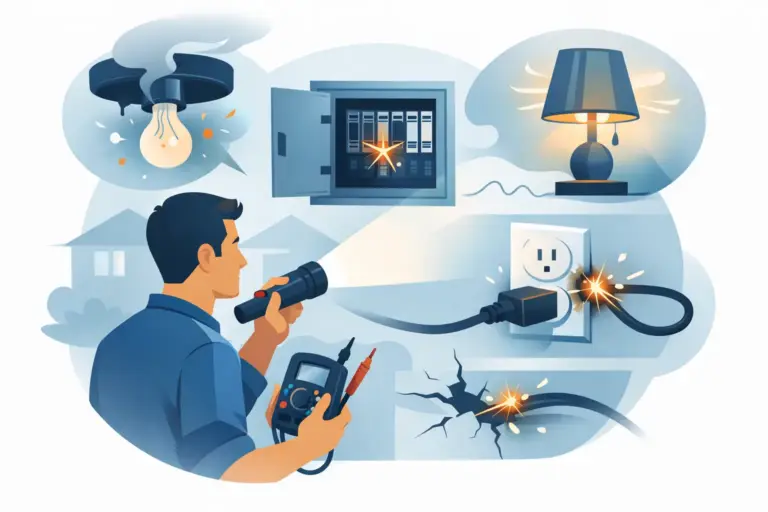
Staff should know to remove damaged equipment from service and report it immediately. Frayed leads, cracked plugs, exposed conductors, scorched sockets, loose extension leads and equipment that causes shocks or repeated tripping all need attention. Do not rely on a multiway adaptor or extension reel as a permanent answer to a shortage of sockets.
Keep a simple asset register where practical. It should identify higher-risk equipment, record inspection dates and make clear when faults were repaired or the item was disposed of.
Emergency lighting, fire safety and safe escape routes
Electrical compliance is closely connected to fire safety. Emergency lighting must operate when normal lighting fails, allowing people to leave the building safely. It should be tested and maintained in line with the relevant fire risk assessment and applicable standards, including BS 5266.
Brief functional tests are commonly carried out monthly, while a full-duration test is completed at appropriate intervals. The required duration and testing arrangements depend on the building and its fire strategy. Testing should be planned so it does not leave a workplace without adequate protection when occupied.
Record test results in the fire safety logbook and act on failures promptly. Check that emergency fittings are clean, exit signs are visible, escape routes are not blocked, and electrical cupboards are not used as general storage areas. A distribution board hidden behind stock or combustible materials is harder to access in an emergency and more difficult to maintain safely.
Records that prove your compliance
Good records make compliance manageable. They also help when a property changes hands, a tenant moves in, an insurer asks for evidence, or an incident needs to be investigated.
Keep EICRs, electrical installation certificates, minor works certificates, emergency lighting test records, portable equipment records, maintenance reports and details of remedial work together. Certificates should relate clearly to the building, board or circuit they cover. A folder full of paperwork is less useful if nobody can identify whether it applies to the current installation.
It is also worth recording electrical drawings, board schedules and isolation procedures for larger or more complex sites. These documents help contractors work efficiently and reduce disruption during faults, alterations or emergency call-outs.
Plan maintenance before faults disrupt the business
Preventative maintenance is usually less disruptive than reacting to a failure during trading hours. Periodic inspections can identify heat damage, loose connections, ageing accessories, poor labelling and circuits approaching their practical capacity before they become a more serious issue.
The right maintenance frequency depends on the building. A warehouse with three-phase machinery, external lighting and frequent vehicle movements needs a different programme from a small office. Wet areas, outdoor equipment, workshops, kitchens and public-facing spaces generally need closer attention because conditions are harder on electrical equipment.
If solar PV, battery storage or EV chargers have been installed, include them in the maintenance plan. These systems introduce additional isolation points, protective devices and generation or storage equipment. They should be properly labelled, safely isolated and inspected by suitably competent professionals. Energy-saving improvements are worthwhile, but they must be integrated correctly with the existing electrical installation.
When to call a qualified electrician
Arrange professional advice without delay if you notice burning smells, discolouration around accessories, electric shocks, frequent circuit trips, buzzing from a consumer unit, water near electrical equipment or damage after building works. These are not faults to monitor until the next planned inspection.
For businesses across Hull, East Yorkshire and Lincolnshire, Steel Electrical Services Ltd can inspect, test and maintain commercial electrical installations, provide clear certification and carry out necessary remedial work. NICEIC-approved work provides added reassurance that installations and reports are completed to recognised industry standards.
A checklist is most useful when it becomes part of normal property management rather than a document retrieved only before an audit. Assign responsibilities, keep records current and act on defects early. That approach protects your people, reduces avoidable downtime and gives you confidence that your premises are being looked after properly.