

A loose socket in a stockroom, lights failing over a reception desk or a tripping circuit in a workshop can quickly become more than an inconvenience. It can interrupt trading, affect staff safety and leave you unsure whether your premises remain compliant. Commercial electrical services are there to keep business premises safe, functional and ready for the working day – not simply to fix a problem once it has stopped everything.
For businesses across Hull, East Yorkshire and Lincolnshire, the right electrical contractor should provide clear advice, tidy work and a realistic plan for getting the issue resolved. Whether you run an office, shop, warehouse, salon, hospitality venue, rental portfolio or industrial unit, electrical work needs to suit how your property is actually used.
What commercial electrical services should cover
Commercial work is broader than changing fittings or adding a socket. A well-maintained electrical installation supports lighting, heating controls, IT equipment, security systems, machinery, emergency lighting and, increasingly, EV charging and solar generation.
The exact requirement depends on the building, the age and condition of the installation, the number of people using it and the equipment connected to it. A small office may need additional data and power points as staff numbers grow. A workshop may need dedicated circuits, higher-capacity supplies or a safer arrangement for machinery. A landlord may need an Electrical Installation Condition Report (EICR) before a tenancy or sale.
A dependable contractor will start by understanding the problem and the premises rather than treating every job as a standard package. That means identifying whether a fault is isolated, whether a circuit is overloaded or whether an older installation needs more substantial attention.
Fault finding that gets to the cause
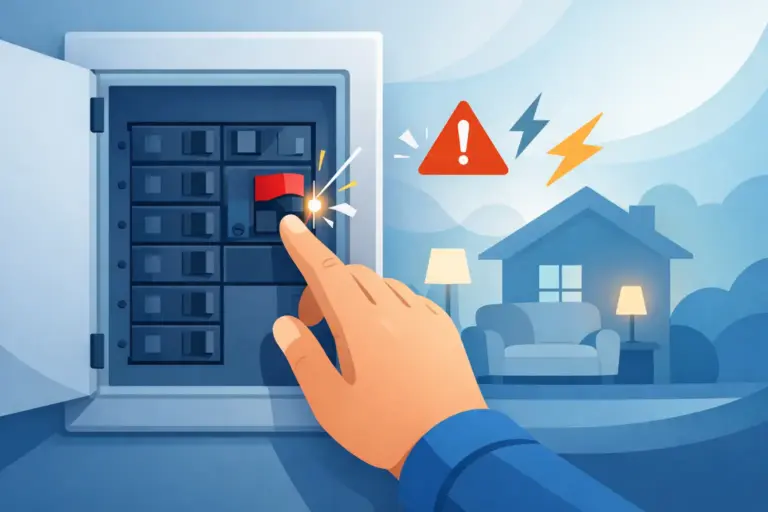
A circuit breaker that keeps tripping is doing a job. Resetting it repeatedly without finding the cause is not a repair. The fault could be a damaged appliance, water ingress, a cable issue, poor connections, overloaded circuits or deterioration within the electrical installation.
Proper fault finding involves testing, inspection and methodical investigation. This reduces the risk of costly guesswork and helps prevent the same issue returning a week later. For a business, that matters because repeated downtime can affect staff, customers, stock and revenue.
Emergency response is particularly valuable where a loss of lighting, power or safety systems makes a premises difficult or unsafe to operate. A fast visit is useful, but a clear explanation of what has failed, what has been made safe and what work remains is just as important.
Testing, inspection and electrical compliance
Electrical testing is often left until a landlord, insurer, buyer or managing agent asks for paperwork. It is better viewed as a practical check on the condition of the installation. An EICR identifies concerns that may not be visible during normal use, including signs of damage, wear, inadequate protection or non-compliance with current safety requirements.
The report will record observations and, where necessary, recommend remedial work. Not every observation means the whole installation needs replacing. Some issues can be addressed through minor repairs or upgrades; others may point to a larger safety concern. The right next step depends on the report findings, the age of the installation and the use of the premises.
For commercial landlords and property managers, keeping accurate certification and records also makes day-to-day management easier. It provides a clear trail of inspections, repairs and improvement works, which is useful when tenants change or questions arise later.
When an upgrade is the sensible option
Older consumer units, fuse boards and distribution equipment may still appear to work, but that does not always mean they offer the level of protection a modern business needs. Changes in use can also expose weaknesses in an installation that was adequate years ago.
An upgrade may be appropriate when circuits regularly overload, protective devices are outdated, new equipment requires additional capacity or an inspection identifies issues that cannot be resolved with minor works. The goal is not to replace equipment for the sake of it. It is to provide safe protection, sensible circuit arrangement and room for the way your business operates now.
A good quotation should explain the scope clearly: what is being replaced, what disruption to expect, whether testing is included and what certification will be provided after completion. This avoids surprises and makes it easier to plan work around opening hours, deliveries and staff access.
Installations built around the premises
Commercial installations need to be practical as well as compliant. Lighting should suit the task being carried out. Socket locations should reduce trailing leads. External power and lighting need suitable protection from the weather and accidental damage. Emergency lighting and escape-route systems need to work when they are required, not just when they are tested.
For a retail unit, the priority may be attractive, reliable lighting and enough power for displays, tills and back-of-house equipment. In an office, it may be reducing extension leads and improving power provision at workstations. In a warehouse or unit, durable fittings, safe distribution and access for future maintenance may matter more.
This is why a site visit is often the best starting point for anything beyond a very small job. It lets the electrician assess cable routes, existing capacity, access constraints and the likely effect on the business. It also gives you a chance to discuss timing. Some work can be completed with minimal disruption during normal hours, while larger upgrades may be better planned outside trading times.
Planning for lower running costs
Electrical work can also support longer-term energy decisions. LED lighting upgrades can reduce energy use and maintenance requirements, especially where lights run for long hours. The savings depend on the existing fittings, operating hours and electricity use, so the right approach is based on your premises rather than a generic claim.
Solar PV, battery storage and workplace EV chargers are becoming more relevant for commercial properties too. They can help businesses use more of their own generated electricity, support electric vehicles and reduce reliance on imported power at certain times. However, suitability depends on roof condition, available space, electricity demand, parking arrangements and the existing supply.
These systems need careful design and installation. A cheap quote that overlooks supply capacity, building structure or future maintenance can cost more later. For renewable and EV work, look for an installer with the relevant accreditations and experience, as well as a willingness to explain the figures without sales pressure.
Choosing a commercial electrical contractor
Price matters, but it should not be the only comparison point. Commercial electrical work affects safety, continuity and compliance. An unclear scope can create false economy if the work does not address the underlying issue or leaves further costs to be discovered later.
When choosing an electrician, ask whether they are approved to carry out the work, whether testing and certification are included, how they manage disruption and what happens if an urgent fault develops. You should also expect straightforward communication, a written quotation and respect for your working environment.
Steel Electrical Services Ltd works with local businesses, landlords and property managers that need responsive, clean and properly certified electrical work. From small alterations and fault finding to EICRs, consumer unit upgrades, solar PV and EV charging, the focus is on doing the job right first time and keeping the process clear from quotation to completion.
Signs your premises need attention
Do not wait for a complete power failure before arranging an inspection. These issues are worth acting on promptly:
- Circuit breakers that trip repeatedly or fuses that regularly blow.
- Burning smells, buzzing fittings, discoloured sockets or warm switches.
- Extension leads and adaptors being used as a permanent solution.
- Flickering lights, failed emergency lighting or damaged external fittings.
- An outdated consumer unit, missing records or an EICR that recommends remedial work.
Some symptoms have a simple cause, while others require urgent investigation. If there is visible damage, signs of overheating or any concern about electric shock, isolate the affected area where safe to do so and arrange professional help.
A well-run premises rarely stays that way by accident. Keeping electrical systems checked, documented and fit for purpose gives you fewer unwanted interruptions and more confidence to focus on the work your business is there to do.