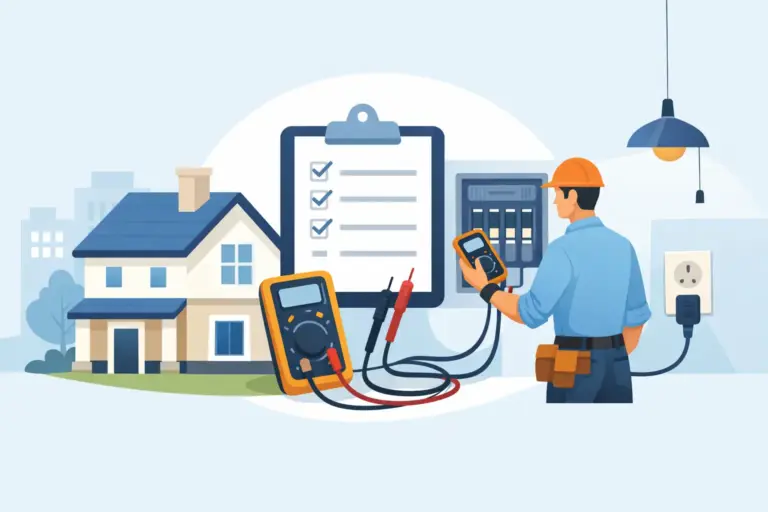


A house rewire and a shop fit-out might both involve cables, circuits and consumer protection, but they are not the same job with a different postcode. The difference between domestic and commercial electrical installation comes down to how the building is used, how much power it needs, what regulations apply and how the system must perform day after day.
For homeowners, landlords and business owners, that matters because the right installation is not just about getting the lights on. It is about safety, compliance, reliability and making sure the system suits the property properly from the start.
What is the difference between domestic and commercial electrical installation?
At the simplest level, domestic electrical installation covers homes – houses, flats, bungalows and similar residential properties. Commercial electrical installation covers premises used for business, such as offices, shops, warehouses, schools, restaurants and industrial units.
That sounds straightforward, but the real difference is in the design brief. A domestic system is usually built around everyday living: lighting, sockets, cooking appliances, showers, heating controls and perhaps newer additions such as EV chargers, solar PV or battery storage. A commercial system often has to support heavier and more varied demand, longer operating hours, shared occupancy, staff and public safety, emergency lighting, fire alarm interfaces and equipment that cannot afford regular downtime.
In other words, domestic work is usually more personal and lifestyle-led. Commercial work is often more operational and compliance-led.
The building use changes everything
The intended use of the property affects almost every part of the installation. In a home, the electrician is thinking about practical living, safe circuit layouts and protecting the occupants. In a commercial premises, there may be staff areas, customer areas, plant rooms, storage areas and specialist equipment all with different demands.
A three-bedroom house might need a consumer unit upgrade, extra socket outlets and kitchen circuits designed around normal family use. A small office, by comparison, may need separate circuits for workstation power, data-related equipment, air conditioning, security systems and emergency lighting. A retail unit may also need display lighting, shutters, signage supplies and back-of-house distribution.
This is why commercial installations often involve more planning at the front end. The electrical system has to match how the business actually runs, not just the floorplan.
Power demand and load calculations
One of the biggest practical differences between domestic and commercial electrical installation is load. Most homes have a predictable pattern of use, even if modern properties now demand more power than they used to. Kitchens, electric showers, heat pumps, EV chargers and battery systems all add to that, but the usage profile is still generally domestic.
Commercial premises can be a different story altogether. Even a modest business may run lighting for extended hours, multiple computers, refrigeration, extraction systems, machinery or catering equipment. Some sites need three-phase supplies rather than single-phase. Others need distribution boards serving different parts of the premises so faults can be isolated without shutting everything down.
Getting the load assessment wrong in a commercial setting can lead to nuisance tripping, overheating, poor performance and costly disruption. In a domestic setting, poor design is still a safety issue, but the operational impact is often less severe than it would be for a business losing power during trading hours.
Different environments, different installation methods
The physical environment also shapes the work. In homes, wiring is commonly concealed in walls, floors and loft spaces, with fittings chosen to suit the finish of the property as well as function. Appearance matters, especially in kitchens, extensions and full refurbishments.
In commercial properties, practicality often comes first. Surface-mounted containment such as conduit, trunking, cable tray or basket may be used because it is durable, accessible and easier to adapt later. That is particularly useful in offices, units and warehouses where layouts may change over time.
There is also more variation in commercial environments. A salon, a farm building, a restaurant kitchen and a warehouse office may all count as commercial, but they present very different conditions. Moisture, heat, grease, dust, impact risk and public access all affect the choice of equipment and installation method.
Compliance is broader on the commercial side
Both domestic and commercial work must comply with BS 7671, and both must be carried out safely by a competent electrician. The difference is that commercial properties often bring extra layers of duty.
For landlords, employers and commercial property operators, electrical safety is tied to wider legal responsibilities. That can include periodic inspection and testing, maintenance records, emergency lighting testing, fire alarm considerations and making sure the installation remains safe for staff, tenants and visitors.
A homeowner may only think about electrics when buying a property, extending the kitchen or dealing with a fault. A business owner or landlord may need an EICR to meet ongoing obligations, keep insurers satisfied or support lease requirements. The electrical installation is part of the building’s compliance picture, not a stand-alone item.
Domestic work is not necessarily simpler
There is a tendency to assume commercial work is complex and domestic work is basic. That is not always true.
Modern homes can involve a surprising amount of technical work. Consumer unit upgrades, full rewires, solar PV, battery storage, EV charging and fault finding in older properties all require solid design, testing and certification. Older domestic properties can be especially challenging because hidden alterations, ageing accessories and outdated earthing arrangements often come to light once work starts.
So while commercial jobs may be larger in scale, domestic jobs still need proper attention. The risks of poor workmanship do not become smaller just because the building is a house.
Testing, certification and ongoing maintenance
Testing is vital in both sectors, but the expectations around maintenance are often different.
A domestic installation is usually tested on completion of new work, with certification issued where required. Homeowners may then leave the system untouched for years unless a fault develops, they carry out alterations or they need an inspection during a sale or purchase.
Commercial installations are more likely to be inspected as part of planned maintenance. Businesses cannot always wait for something to fail. Faults can affect trading, safety and staff productivity. In shared or tenanted buildings, electrical issues may also create disputes around responsibility if records are not clear.
That is why commercial clients often need an electrician who can do more than install. They need someone who can inspect, report, advise and respond quickly when problems affect day-to-day operations.
Timescales, disruption and access
Another important difference is how the work has to be delivered. In domestic properties, the electrician usually works around the household. That means keeping disruption manageable, protecting finishes, maintaining power where possible and leaving the place clean and tidy.
In commercial settings, access can be more restricted even though the premises may be larger. Work may need to happen outside trading hours, before staff arrive, during shutdown periods or in phases so the business can keep running. Health and safety procedures may also be stricter, especially where staff, customers or other contractors are on site.
This is one area where experience really shows. A technically correct installation still needs to be practical for the people using the building while the job is underway.
Cost differences and why the cheapest quote can mislead
Commercial electrical work often costs more than domestic work, but that is not just because the premises are bigger. The design can be more involved, materials may be heavier duty, access arrangements can take longer and testing requirements are often more extensive.
At the same time, domestic jobs can become costly when older wiring, hidden defects or extra remedial work are uncovered. A low quote on either type of project can be misleading if it has not allowed for the actual condition of the property or the way the space is used.
Honest advice matters here. A good electrician should explain what is required, what is recommended and where there is flexibility. Sometimes a straightforward upgrade is enough. Sometimes the safest and most cost-effective answer is a more substantial piece of work done properly the first time.
Choosing the right electrician for the property
If you are comparing contractors, the main question is not whether they can wire a socket or replace a light fitting. It is whether they understand the demands of your type of property and the standards it needs to meet.
A homeowner may need clear advice on a rewire, an EV charger or a consumer unit replacement. A landlord may need certification and remedial works completed promptly between tenancies. A business owner may need minimal downtime, planned testing and confidence that the installation is suitable for staff and customers. Those are different priorities, even when the underlying regulations overlap.
That is why working with a contractor who handles both domestic and commercial projects can be useful. They are more likely to spot where the job is routine, where it is not and where future use should shape the design. For customers across Hull, East Yorkshire and Lincolnshire, that practical crossover is often what turns a decent job into a dependable one.
If you are unsure what category your project falls into, or whether your current system is fit for purpose, the best starting point is a proper assessment of the building, the load demand and how the space is actually used. Good electrical work begins with getting that part right.